
2025-05-08
We all know how wastewater affects the environment badly, right? We can see many local water bodies contaminated by wastewater from industries. Isn't it concerning that we are polluting our precious bodies and that in the near future we will run out of pure water?
Have you ever thought about how we can turn this wastewater into water that we can use again? There comes the role of water treatment services in Malappuram; we will help to purify wastewater and conserve our natural bodies as pure as possible.
In this blog we are going to discuss how a water testing laboratory in Kerala processes wastewater into pure water.
Step 1: Preliminary treatment - Removing large debris
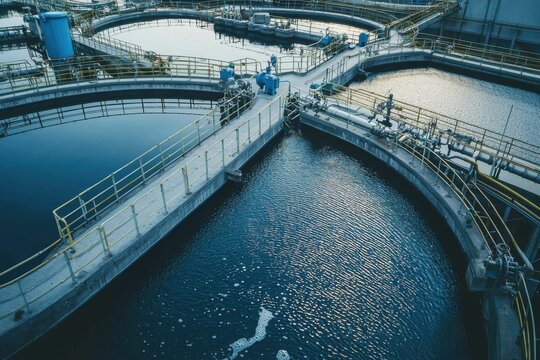
The first step is screening the wastewater. This water may contain large debris such as plastics, rags, etc., which are removed using screens or filters. This makes the next stage more efficient. Sometimes, chambers are also used to settle out the heavy particles like sand and stones.
In this process, the wastewater is sent to large tanks where solids settle at the bottom, called sludge, and oils float to the top. These materials are then separated and removed. This process reduces a significant amount of organic and inorganic material.
Here comes the role of nature!
In this process, the wastewater is exposed to bacteria and other microorganisms that eat the organic pollutants.
Activated sludge systems: Air is pumped into tanks to make the bacteria grow and break down faster.
Biofilters: Wastewater runs over a surface covered with bacteria.
By the end of the process, most of the harmful organic matter is gone.
Step 4: Tertiary Treatment—Advanced Purification
In this process, we know the water is clean, but it's not completely pure to use. This is the final process of polishing that removes any remaining impurities, such as
● Nitrogen and phosphorus, which cause algal blooms in the rivers,
● Heavy metals
● Pathogens, those disease-causing germs
● This stage often uses technologies like
● Filtration through sand, carbon, or membranes
● Chemical treatment—the process of adding disinfectants like chlorine
● UV radiation - To kill bacteria and viruses without chemicals.
The solid waste called sludge collected during the process is separated and can be used as biogas or fertilizer or safely disposed of in landfills. Proper management of sludge is essential to complete the cycle of safe effluent treatment.
After all these processes, the treated water is safely discharged into rivers or the ocean or reused within the industry for cleaning, cooling, irrigation, and more.
Effluent management is an essential requirement and a key process for environmental sustainability. Industrial growth imposes greater responsibility on companies to conduct proper treatment of wastewater that will be returned to the environment. Following the complete treatment sequence, including initial filtration and sophisticated purification, allows effective transformation of polluted effluent into reusable valuable water. Industrial water solutions in Malappuram make it our mission to assist industries in their transformation by producing cleaner water bodies alongside pollution reduction along with precious water resource conservation. Current water management practices will determine our water future. Our promise should be to practice smarter, environmentally friendly water management both for the current generation and future generations.