
2025-12-05
Have you ever wondered how much harmful wastewater industries release every single day? And where does it all go? Many factories across sectors struggle with increasing wastewater volumes, rising compliance pressures and the growing demand for sustainable operations. Without the right systems in place, untreated effluent can damage ecosystems, harm public health and put an industry’s reputation and license to operate at risk. This is exactly where an advanced effluent treatment plant becomes not just a requirement, but a long-term asset.
For industries in Kerala, where water is a precious resource, implementing a wastewater treatment plant is a strategic move toward sustainability.
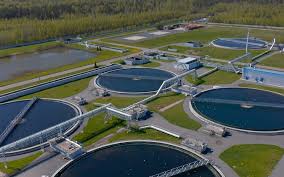
An effluent treatment plant, commonly referred to as ETP, is a specialised system designed to treat industrial wastewater before it is discharged or reused. Unlike other sewage treatment, industrial effluent contains chemicals, oils, toxic elements, heavy metals and high organic loads, depending on the type of industry. It helps industries comply with pollution norms while contributing to better water management practices. An ETP typically includes:
● Primary treatment: Removal of solids, grit and suspended particles
● Secondary treatment: Biological processes to reduce organic matter
● Tertiary treatment: Advanced filtration, disinfection and nutrient removal
● Sludge handling: Safe disposal or conversion into usable by-products
Why Effluent Treatment Plants Matter for Industrial Sustainability?
In the industrial context, untreated effluent can carry metals, chemical byproducts, organic loads and nutrients that can harm aquatic life and disrupt natural water cycles. Therefore, this requires a reliable system to treat their wastewater before it is discharged or reused. That’s where an effluent treatment plant becomes part of the sustainability solutions rather than just an expense.
● Regulatory compliance: Many state boards require specific discharge standards for industrial effluents. Without a robust system, companies face penalties or shutdowns.
● Environmental safeguard: Proper ETPs make sure water bodies are protected from toxic or nutrient-rich discharges that harm aquatic species.
● Resource reuse: Treated effluent becomes a valuable resource, usable for cooling, irrigation or onsite processes, thereby reducing freshwater demand.
● Cost savings & brand value: Efficient treatment can reduce wastewater disposal costs, lower water procurement and improve corporate responsibility credentials.
Modern effluent treatment plants don’t just clean water; they reclaim value. Here’s how innovations in industrial ETPs are helping industries transition from waste disposal to resource recovery:
Advanced systems combine biological degradation with physico-chemical steps (coagulation, flocculation, sedimentation). This allows for the efficient removal of complex pollutants, resulting in effluent that’s fit for reuse or safe discharge.
In industrial settings, space may be constrained or production volumes may vary. The modular ETP design allows capacity scaling and adaptation. That means an industrial ETP plant in Kerala can evolve as operations expand.
By integrating filtration, reverse osmosis and evaporation crystallisation, treated effluent becomes a cleaned-up resource. Some facilities even achieve ZLD, eliminating discharge and recovering salts or reusable water.
Some treatment systems capture biogas from sludge digestion, recover heat or concentrate nutrients for fertiliser use. That creates value streams from what used to be cost centres. In effect, your ETP becomes a mini-resource factory.
Industrial ETPs incorporate sensors, remote monitoring, predictive maintenance and automated controls. These reduce downtime, optimise chemical usage and make sure consistent effluent quality.
● Local expertise & regional alignment: Watermaq specialises in wastewater and effluent treathttps://greenmethodengineering.com/ment solutions in Kerala, understanding the specific regulatory, climatic and operational contexts.
● Customised industrial ETP plant solutions: We provide design, installation and maintenance of industrial ETP plants in Kerala, to get a system matched to your production volumes, pollutant load and future growth.
● Complete service lifecycle support: From feasibility to commissioning to post-installation support, Watermaq covers the full spectrum, which means less stress and more predictable outcomes for your operation.
● Sustainable resource mindset: The approach isn’t just about treating and discharging, it’s about turning effluent into usable resource streams, reducing freshwater dependency and providing sustainability.
● Future-ready: Installing advanced treatment technologies not only meets current standards but also prepares your induhttps://gtsenviro.com/effluent-treatment-plant-manufacturers-kerala/strial ETP plant in Kerala for upcoming regulations and stricter discharge limits, ensuring long-term operation.
Conclusion
Industrial-scale discharge is no longer just about treating water; it’s a chance to turn wastewater into a resource that supports environmental sustainability. An effluent treatment plant https://watermaq.com/service/waste-water-treatment-plantin Kerala links production with ecological responsibility. Choose Watermaq for solutions built around local needs.
Let your wastewater not just meet compliance!
Let it feed your resource loop, support your sustainability goals and help build a cleaner water future.