
2026-11-10
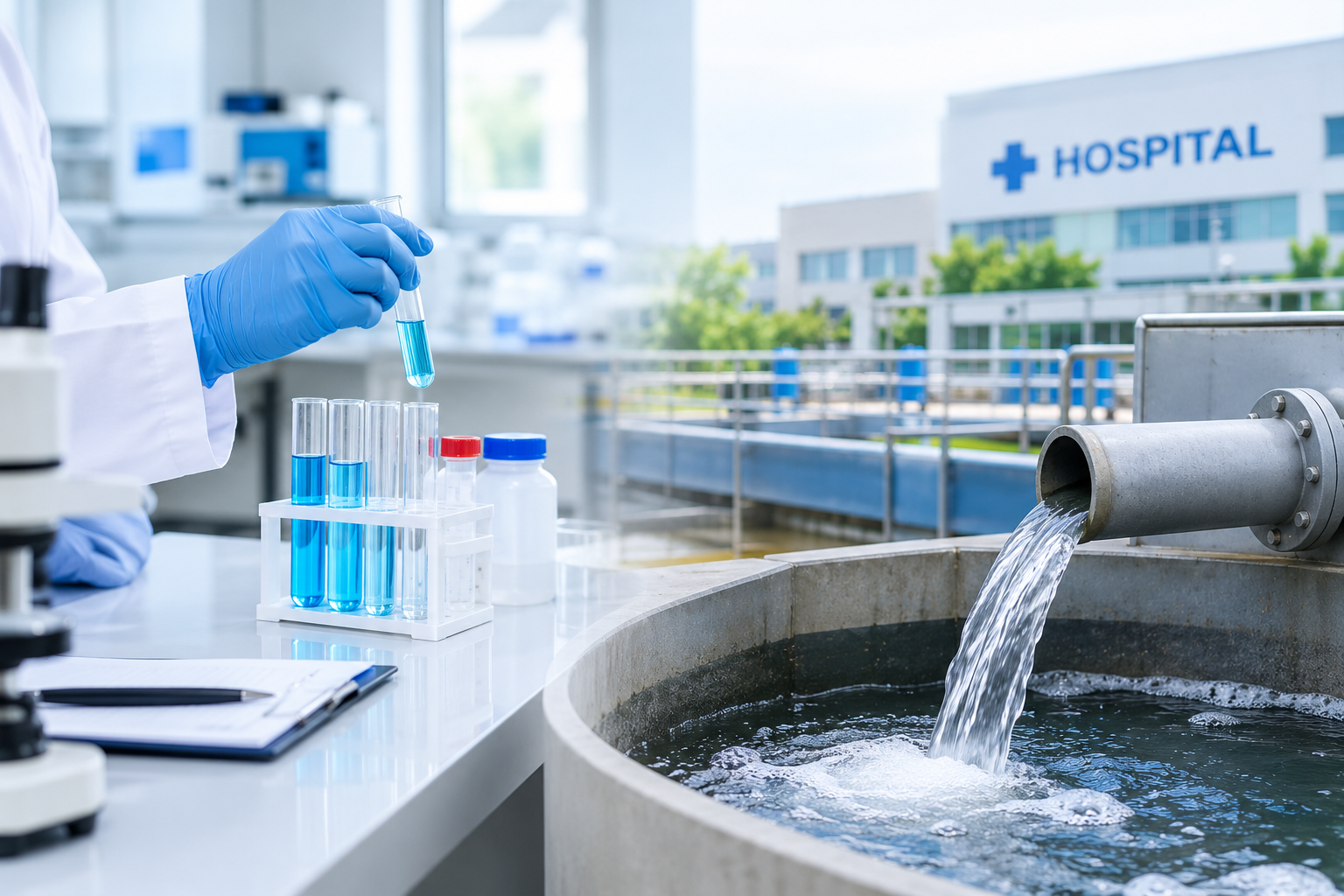
Healthcare facilities generate wastewater from cleaning, medical activities, and equipment washing. This wastewater may contain chemicals, disinfectants, and harmful microorganisms. Proper treatment helps protect the environment and supports safe wastewater disposal.
A reliable wastewater treatment plant service in Kerala can help hospitals assess wastewater quality, identify treatment requirements, and maintain their treatment systems.
Healthcare wastewater requires careful management because it may:
● Contain hazardous chemicals and heavy metals.
● Affect the efficiency of wastewater treatment systems.
● Include potentially infectious materials.
● Create environmental risks if discharged improperly.
The treatment process should depend on the type of laboratory activities, wastewater composition, and applicable regulations.
Testing wastewater helps identify its characteristics and determine whether specific contaminants require additional treatment before discharge.
Some laboratory wastewater may be highly acidic or alkaline. Appropriate pH adjustment can help prepare it for further treatment.
Depending on laboratory activities, specific treatment processes may be required to reduce certain chemicals, metals, or other pollutants.
When biological contamination is a concern, suitable disinfection methods may be necessary to reduce microbial risks.
Hospitals should separate hazardous laboratory waste from ordinary wastewater at the source. Waste that requires specialised handling should not be discharged directly into drains.
Hospitals can improve their wastewater management practices by:
● Conducting regular wastewater quality tests.
● Separating hazardous waste before it enters the drainage system.
● Inspecting and maintaining treatment equipment.
● Monitoring treatment performance.
● Following applicable pollution control and biomedical waste management requirements.
When choosing a sewage treatment plant in Malappuram, hospitals should assess wastewater volume, contaminant levels, available treatment facilities, and discharge requirements.
A professional wastewater assessment can help determine whether pretreatment is necessary and identify suitable treatment options. Regular monitoring and proper maintenance also help ensure that the treatment system continues to operate effectively.
Working with an experienced wastewater treatment provider can help hospitals manage laboratory wastewater responsibly and maintain a suitable treatment process